Do Digital Vision Boards Work for Goal Setting? Here's What the Research Actually Says

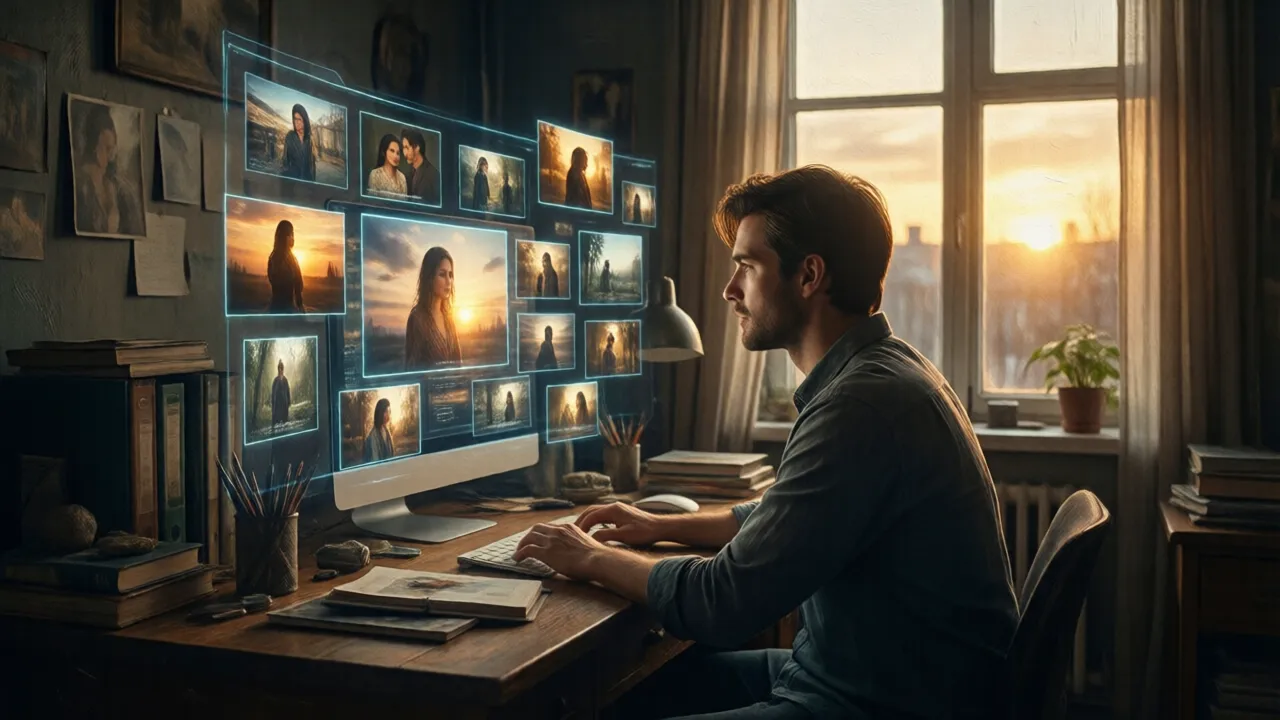
Do Digital Vision Boards Work for Goal Setting? Here's What the Research Actually Says
Intentions account for only 20% to 30% of the variance in behavior.
Read that again. That's Peter Gollwitzer's research on implementation intentions — and it's the quiet reason your vision board from January isn't working in April. Wanting something and doing something about it are not the same psychological state. They're not even close.
So when the Pinterest girlies and the manifestation TikToks tell you to "visualize your dream life and it will come," the science has a slightly different take.
The Part Nobody On Your Feed Is Telling You
Here's the uncomfortable finding. From the Wikipedia entry on dream boards, summarizing the psychology research:
"There is some evidence that vision boards may be counterproductive, since continually fantasizing about success can lead to taking fewer actions to realizing it."
Counterproductive. Not useless. Not neutral. Counterproductive.
Your brain, bless it, can't fully tell the difference between imagining a thing and doing the thing. When you spend 20 minutes a day staring at an aesthetic collage of the life you want, you get a small hit of the emotional reward you'd get from actually reaching those goals. And because you already feel a little bit like you won? You try a little bit less.
That's the trap of the standalone digital vision board. It's not a goal-setting tool. It's a mood board with ambition cosplay.
Sound harsh? Stay with me — there's a fix.
What The Research Says Actually Moves The Needle
Let's pull out the two names you should know: Gabriele Oettingen and Edwin Locke.
Locke, along with Gary Latham, spent decades establishing what's now the most validated finding in goal psychology. According to goal-setting theory:
"Difficult specific goals lead to significantly higher performance than easy goals, no goals, or even the setting of an abstract goal such as urging people to do their best."
Translation: "I want to be happy and successful" is not a goal. "I want to ship three client projects by July 15 and save $8,000 by year-end" is a goal. The vision board version is the first one. The OKR version is the second one.
Oettingen took this further. Her research on mental contrasting found something vision-board culture gets exactly backwards:
"Mentally contrasting future and present reality most successfully evokes changes of cognition, emotion, and behavior."
Notice the word contrasting. Not just visualizing the future. Holding the future next to the present — and letting the gap between the two drive you. The sting of "I'm not there yet" is the fuel. The daydream alone is the anesthetic.
The Intention-Behavior Gap — Why You Keep Missing
Here's where Gollwitzer walks in and blows the whole thing open.
In a classic study (Gollwitzer & Brandstätter, 1997), students were given a project to complete over the holiday break. One group set a clear intention. The other group went further and formed implementation intentions — specific plans of when, where, and how they'd start.
"Two-thirds of students who had formed implemental intentions successfully finished the project. In contrast, students who had no implemental intentions mostly failed."
Two-thirds versus mostly failed. Same goal. Same students. One variable.
That variable was the bridge between wanting and doing. And it wasn't a prettier vision board.
WOOP — The Science-Backed Upgrade
So what do you actually do instead? Oettingen's team took mental contrasting, combined it with implementation intentions, and packaged it as WOOP:
- W — Wish. What do you actually want? Be specific. Challenging. Not "be healthy." More like "run a half-marathon by October."
- O — Outcome. Imagine the best result of achieving it. This is where visualization earns its keep — one minute, not one morning.
- O — Obstacle. What inside you gets in the way? Be honest. "I skip runs when I'm tired" hits harder than "I lack discipline."
- P — Plan. If-then. If [obstacle happens], then I will [specific action].
That's it. Wish, Outcome, Obstacle, Plan.
Notice what's missing. There's no collage. No thirty images of beaches and Teslas and abs. There's a dream, a confrontation with reality, and a concrete plan that fires automatically when resistance shows up.
This is the difference between a vision board that makes you feel good and a system that makes you move.
The Manifestation Trap
Quick detour — because if you've been on wellness TikTok, you've seen the other extreme. Pure "law of attraction," "the universe will provide," visualize-and-it-will-come content.
Recent empirical research on law-of-attraction beliefs is not kind:
"Individuals who indulge in manifestation and law of attraction beliefs often do exhibit higher perceived levels of success, these beliefs are also seen being associated with higher risk taking behaviors, particularly financial risks, and show a susceptibility to bankruptcy."
Perceived success. Higher risk. More bankruptcies. People who believe the universe is their co-founder tend to make bets they can't back up.
Feeling like you're winning isn't the same as winning. That's the through-line of everything the research says.
So Do Digital Vision Boards Work? Yes — If…
Here's the honest answer to the question you came here for.
Digital vision boards work if they're the first 5% of your system — not the entire thing. They can:
- Clarify what you actually want (most people can't even answer this)
- Create emotional resonance with a future self
- Remind you daily why you're doing the hard stuff
What they can't do alone:
- Translate wishes into measurable targets
- Close the intention-behavior gap
- Trigger the right action at the right moment
The fix is simple. Every image on your board needs three things attached to it: a specific difficult goal (Locke), a contrasted obstacle (Oettingen), and an if-then plan (Gollwitzer). Without that, you've built a screensaver.
An "action board," as Wikipedia calls it, is often the better alternative: visual inspiration plus the concrete steps that lead there.
How IdealWeek Does This For You — By Design
This is exactly what IdealWeek is built around. Not as another feature list — as the structural fix for why vision boards fail.
- The Dream Factory is your wish and outcome. Long-term vision, 10-year goals, the life you're designing.
- The OKR Engine is your contrast and specificity. Every Objective has weighted Key Results with deadlines — that's Locke & Latham in app form. You can't save a Key Result without a measurable target. That forces the gap-thinking your brain wants to skip.
- The Execution Planner is your implementation intentions. When will you act? Where? For how long? You schedule it. You get reminded. The burning candle focus mode kicks in. Gollwitzer would be proud.
You don't replace the vision. You weaponize it.
What To Do This Week
Open your phone. Right now. Not after this article — now.
- Pick one image from your vision board. Just one.
- Write the specific, challenging, measurable goal it represents. Not "travel more." "Book a 10-day trip to Japan by November 2026."
- Name the one obstacle that always shows up. Honestly.
- Write: "If [obstacle], then I will [specific action]."
That's WOOP. That's twenty years of psychology research. That's the difference between a pretty collage and a life that actually changes.
A year from now, you'll either have done the thing — or you'll have a nicer-looking vision board. Pick.
Related Articles
View all →
Atomic Habits Summary: Key Lessons from James Clear
You set a goal to work out three times a week. You lasted two weeks. You decided to read 30 minutes before bed. That lasted until your phone…

Evidence-Based Goal Setting in 2026: What the Research Actually Says
**76% of people who wrote down their goals, built a plan, and shared weekly progress with a friend actually achieved them. The group that ju…

How to Design Your Ideal Life: A Practical Guide
Like many people, you probably love formulas, rules, and instructions. You want to boil things down into steps and procedures. You dislike g…