Ikigai: How to Find Meaning and Purpose in Life

The Question That Keeps You Up at Night
Why do you get up in the morning?
Not the practical answer — the alarm goes off, you have bills to pay, people depend on you. But the deeper one: What makes your life feel worth living? What gives you a reason to exist?
For many people, this question remains unanswered. They drift through days, weeks, years — busy but unfulfilled, successful but empty, comfortable but purposeless.
There's a Japanese concept that offers an answer. It's called ikigai (pronounced "ee-key-guy"), and it's been guiding people toward meaningful lives for centuries.
Ikigai combines two Japanese words: 'iki' (to live) and 'gai' (reason). Together, they signify "a reason to live" — that which gives your life worth, meaning, or purpose. It's similar to the French term raison d'être, but with a distinctly Japanese sensibility: less grandiose, more grounded in daily practice.
This is a complete guide to ikigai: the four-circle diagram, the connection to longevity and flow, how to discover your own ikigai, and why finding purpose might be the most important thing you ever do.

What Is Ikigai? The Japanese Art of Purpose
Ikigai is a Japanese concept that unites the joy of life with a sense of purpose. It's not a lofty, abstract philosophy — it's practical, grounded, and deeply personal.
According to the Japanese, each of us has a different ikigai. Your ikigai could center on an art or craft, a sport, your job, raising children, volunteering, or any number of things. You don't necessarily have just one ikigai. Einstein, for example, had two: physics and playing the violin. He said that if he hadn't been a physicist, he would have devoted his life to music.
Japanese psychologist Michiko Kumano describes ikigai as "a state of wellbeing that arises from devotion to activities one enjoys, which also brings a sense of fulfillment."
Neuroscientist Ken Mogi puts it more poetically: ikigai is "a reason to get up in the morning" or "waking up to joy."
Importantly, ikigai is not just about personal fulfillment. It typically involves both a personal pursuit AND benefit to others. Your ikigai brings meaning to your life while also contributing to the good of others.
The Ikigai Diagram: Four Circles to Purpose
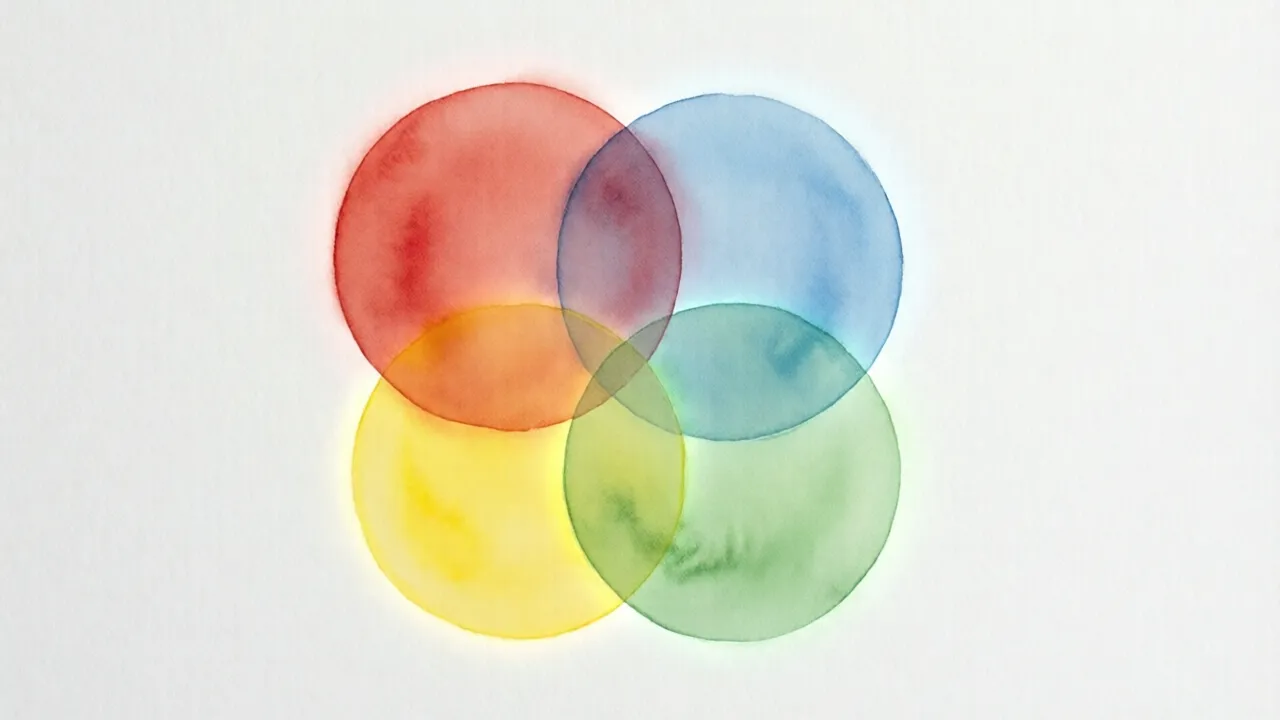
The heart of ikigai is the ikigai diagram — a visual tool that helps you explore the intersection of four essential elements:
| Circle | Question | What It Represents |
|---|---|---|
| What You Love | What activities make you feel alive? | Your passion and joy |
| What You're Good At | What skills come naturally to you? | Your vocation and talents |
| What the World Needs | What problems do you feel called to solve? | Your mission and contribution |
| What You Can Be Paid For | What value can you exchange for income? | Your profession and livelihood |
At the intersections of these circles lie important distinctions:
- Passion = What you love + What you're good at
- Mission = What you love + What the world needs
- Vocation = What the world needs + What you can be paid for
- Profession = What you're good at + What you can be paid for
Ikigai sits at the center — where all four circles overlap. This is the "sweet spot": something you're passionate about, that you're good at, that the world needs, and for which you can be paid.
A note of caution: Some scholars argue that this four-circle diagram is a Westernized version of ikigai. Traditional Japanese ikigai may be simpler — closer to "embracing the joy of little things, being in the here and now, reflecting on past happy memories." It may not require all four elements to intersect.
Whether traditional or Westernized, the diagram is a useful tool for self-reflection.
Ikigai and Longevity: The Okinawa Blue Zone
Here's where ikigai gets fascinating: it's not just about meaning — it's about living longer.
Okinawa, Japan is home to some of the world's longest-lived people. It's one of the five "Blue Zones" — geographic regions where people live significantly longer than average. Okinawa has more centenarians (people who live to 100+) per capita than anywhere else on Earth.
Scientists who have studied Blue Zones say the keys to longevity are: diet, exercise, strong social ties, and having a life purpose.
García and Miralles, authors of Ikigai: The Japanese Secret to a Long and Happy Life, visited the rural Okinawan town of Ogimi — whose residents have the longest average lifespan of all Okinawans. They interviewed 100 of the town's oldest residents and identified five principles of longevity:
- Refuse to worry.
- Create positive habits — such as growing a garden, exercising, and cultivating spirituality.
- Feed and nurture your friendships each day.
- Live unhurried.
- Choose optimism.
Above all five principles stands ikigai. It's the heart of Japanese longevity.
Research supports this connection. Studies have shown that having a sense of purpose (ikigai) can:
- Influence immune function
- Increase life expectancy
- Reduce anxiety
- Improve resilience
- Lower risk of cardiovascular disease
Purpose isn't just nice to have. It's essential for health and longevity.

Flow: The State Where Ikigai Lives
Ikigai is closely related to another psychological concept: flow.
Flow, described by psychologist Mihaly Csikszentmihalyi, is the state of optimal experience. It occurs when you're so immersed in an activity that you lose track of time, forget your worries, and simply inhabit the moment. Athletes call it "being in the zone."
Flow happens when your body or mind is stretched to its limit in a voluntary effort to accomplish something difficult and worthwhile. It's a string of "best moments" — when your consciousness, actions, and energies come together to produce high performance.
To experience flow, ask yourself: Which activities do I enjoy so much that they make me forget about everything else?
These flow activities are clues to your ikigai. When you're in flow, you're doing something you love AND something you're good at — two of the four ikigai circles. Add what the world needs and what you can be paid for, and you've found your ikigai.
Finding Your Ikigai: A Practical Guide
Your ikigai is hidden deep within. You have to search for it. But Okinawans say you shouldn't become preoccupied with finding it. Instead, let your ikigai find you as you occupy yourself with doing what you love in the company of people who love and care for you.
Here are 10 ways to discover your ikigai:
1. Practice Mindfulness
Engage in mindfulness practices to foster a deeper connection with your inner self. Start with simple exercises: paying attention to your breath, being fully present in the moment.
2. Reflect on the Ikigai Diagram
Take time to free-write for 5+ minutes on each of the four elements. Let yourself write uncensored thoughts. Then reflect on discoveries.
3. Identify Your Passions and Strengths
Write down what excites you, what you're in love with, what your strengths are. Look for patterns.
4. Embrace Meditation
Establish a regular meditation routine to explore your inner thoughts and feelings. It can help uncover insights about your passions and skills.
5. Explore What the World Needs
Reflect on issues that tug at your heartstrings. What problems do you care about solving? How can your passion and vocation support you in solving them?
6. Align Your Actions
Start aligning your actions with your passions, strengths, and the needs you've identified. Set mindful resolutions. Engage in activities that fit your aspirations.
7. Experiment and Observe
Try new things. Experiment with different activities and observe what brings you joy and a sense of purpose. Start small with low-stakes activities.
8. Seek Feedback
Talk to people you trust. Others might offer valuable insights about your skills and contributions that you can't see yourself.
9. Practice Patience and Persistence
Finding your ikigai takes time. It's a journey of self-discovery, not a race. Be patient. Be persistent.
10. Engage in Self-Reflection
Set aside time for self-reflection. Think about your experiences, what you've learned, how you feel about your current path. Journaling helps.
Logotherapy and Morita Therapy: Two Paths to Purpose
Two therapeutic approaches can aid your ikigai journey:
Logotherapy (Western)
Created by Viktor Frankl, a Holocaust survivor and psychologist, logotherapy focuses explicitly on helping people find meaning. Like ikigai, logotherapy says we don't create life's meaning — we discover it. Each person's meaning is unique and evolves throughout life.
Frankl famously declared: "You can take away everything from a person except their ability to choose their attitude."
In logotherapy, the therapist helps the patient realize that negative feelings and neuroses are actually the desire for a meaningful life. Once the patient discovers their life purpose (ikigai), they can accept it and move forward.
Morita Therapy (Japanese)
Morita therapy is based on accepting emotions instead of controlling them. The patient goes on absolute bed rest for a week, simply observing emotions in silence. Then the protocol gradually reintroduces activities like gardening and chopping wood, along with diary-keeping and breathing exercises.
Eventually, the patient rejoins the world with a new sense of purpose, having cleared mental-emotional clutter and seen clearly what they're supposed to do.
Resilience: The Muscle That Sustains Ikigai
Resilience is the ability to handle setbacks and keep going. It's mutually reinforcing with ikigai: people with clear ikigai tend to be resilient, and resilience enables continued pursuit of ikigai despite difficulties.
Two Japanese concepts support resilience:
Wabi-Sabi — Finding beauty in imperfection and impermanence. Nothing is perfect, nothing is permanent, and that's okay. This mindset helps you accept setbacks as part of the journey.
Ichi-Go Ichi-E — "One time, one meeting." Treasuring each moment as unrepeatable. This mindset helps you stay present and appreciate the journey, not just the destination.
Examples of Ikigai in Action
Jiro Ono: The Sushi Master
Jiro Ono devoted his life to perfecting sushi-making. He runs a small, 10-seat restaurant in Tokyo and holds three Michelin stars. In the documentary Jiro Dreams of Sushi, he says:
"You have to fall in love with your work… dedicate your life to mastering your skill… I'll keep trying to reach the top, but no one knows where the top is."
His ikigai: pursuing excellence in sushi preparation and sharing it with those who appreciate it.
Jane Goodall: The Primatologist
Goodall had a passion for animals from an early age. She pursued it by studying apes in the wild, became highly skilled, and became an animal rights advocate. Her ikigai: connecting with, learning about, and advocating for great apes.
Dave Rastovich: The Surfer and Advocate
Rastovich is an acclaimed "free" surfer who founded Surfers for Cetaceans, protecting dolphins and whales. His ikigai: pursuing flow states in surfing while ensuring other creatures get to experience their own flow states.
The Benefits of Finding Your Ikigai
When you live in alignment with your ikigai:
- Increased happiness — Activities fill you with joy because you're living for your purpose
- Reduced stress — Disconnection causes stress; alignment brings balance and tranquility
- A sense of fulfillment — Contributing positively to the world enriches your life and others'
- Enhanced motivation — Clear ikigai is a driving force that keeps you going through tough times
- Improved health — Purpose boosts immunity, lowers anxiety, extends lifespan
- Personal growth — Ikigai is a journey of self-improvement, exploring new facets of yourself
How IdealWeek Covers This
IdealWeek takes the concept of ikigai — finding purpose through the intersection of passion, skills, world needs, and livelihood — and builds it into a personal operating system for turning purpose into weekly action.
The Four Circles Diagram is covered by Long-Term Vision. Your 10-year vision isn't just career goals — it's an exploration of what you love, what you're good at, and what impact you want to make. You define Objectives that sit at the intersection of these elements, ensuring your goals align with your ikigai.
Passion and Mission are covered by the OKR Engine. When you create Objectives, they're tied to what you love (passion) and what impact you want to have (mission). The AI-assisted OKR creation helps you articulate these connections clearly.
Flow State Connection is covered by Focus & Notifications. The burning candle focus mode creates the conditions for flow: distraction-free, time-boxed, visually engaging. When you start an activity tied to your ikigai, focus mode helps you enter the zone.
Resilience and Ikigai are covered by Insights. The dashboard shows your progress — not just what you've accomplished, but how you're trending. When you face setbacks, the behind-the-plan alerts tell you exactly where you stand, helping you stay resilient and adjust course.
It's a Journey is covered by the Execution Planner. Ikigai isn't found in a day — it's discovered through consistent action over time. The Execution Planner breaks your long-term vision into quarterly OKRs and weekly actions. You don't just dream about purpose — you execute toward it, week by week.
Five Principles of Longevity are supported throughout: the structured system reduces worry (refuse to worry), weekly planning builds positive habits (create positive habits), the system keeps you connected to your vision (nurture friendships through shared purpose), quarterly cycles prevent burnout (live unhurried), and progress tracking reinforces optimism (choose optimism).
IdealWeek is built on the principle that purpose without execution is just a dream. The app doesn't just help you discover your ikigai — it helps you live it through structured planning, focused execution, and data-driven reflection.
Key Takeaways
Ikigai means "a reason to live" — combining 'iki' (to live) and 'gai' (reason/benefit)
The four circles: what you love, what you're good at, what the world needs, what you can be paid for
Okinawa's Blue Zone residents live longest partly because they center their lives around ikigai
Purpose improves health: boosts immunity, reduces anxiety, extends lifespan
Flow states occur when you're so immersed in an activity you lose track of time — these are clues to your ikigai
Logotherapy (Viktor Frankl) and Morita therapy offer two paths to discovering meaning
Five principles of longevity: refuse to worry, create positive habits, nurture friendships, live unhurried, choose optimism
Resilience and ikigai are mutually reinforcing — purpose builds resilience, resilience sustains purpose
Wabi-sabi (beauty in imperfection) and ichi-go ichi-e (treasure each moment) support the ikigai journey
Finding ikigai is a journey, not a destination — it requires patience, experimentation, and self-reflection
Further Reading
Related Articles
View all →
How to Find Your Life Purpose Using the Ikigai Method
You've felt it before. That quiet question in the back of your mind: *Is this all there is?*

Anti-Hustle Culture: What It Means and Why It's Growing in 2026
Here's a number that should stop you mid-scroll.

Do Digital Vision Boards Work for Goal Setting? Here's What the Research Actually Says
**Intentions account for only 20% to 30% of the variance in behavior.**