How to Use Technology Without Letting It Use You (2026 Playbook)

How to Use Technology Without Letting It Use You (2026 Playbook)
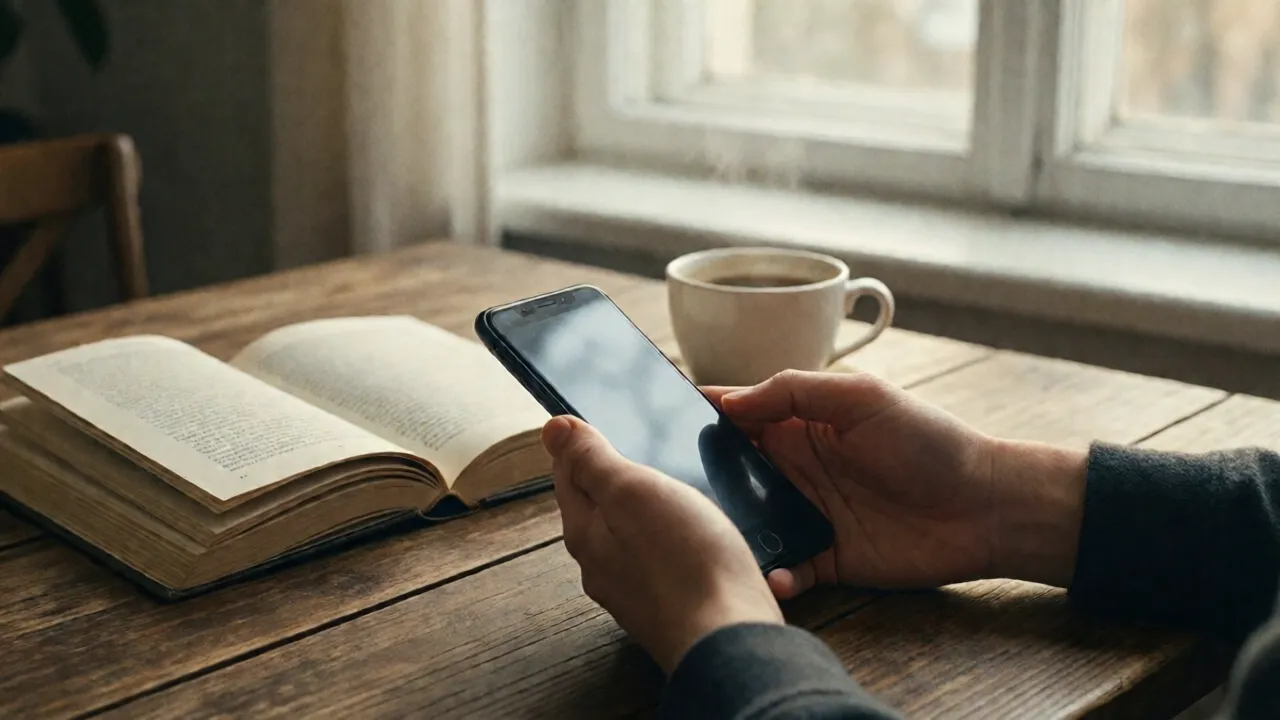
You check your phone 96 times a day. That's once every 10–12 minutes, every waking hour, every day. And here's the uncomfortable part: you didn't decide to do that. A room full of PhDs decided for you, and they got paid a lot of money to make sure it happened.
This article isn't a digital detox manifesto. Quitting your phone isn't the goal — you have a job, friends, a life that lives on those screens. The goal is getting the reins back. Because right now, if we're being honest, the reins aren't in your hands.
Sound familiar? You sit down to work on something important. Five minutes later your phone buzzes. Ten minutes after that you're in a feed you don't remember opening. An hour later the important thing is still waiting. You didn't lose your focus — it was taken from you. Once you see how, you can't unsee it. And that's when the fix becomes possible.
Here's What Actually Happens
Back in 1971, the economist Herbert Simon said something that predicted the entire next 50 years:
"A wealth of information creates a poverty of attention and a need to allocate that attention efficiently."
He was right. Information exploded. Attention didn't. And when a resource becomes scarce, someone builds an economy around extracting it. That's the attention economy — and you're not a customer in it. You're the product being sold.
Tristan Harris, a former Google design ethicist, put it bluntly:
"All of our minds are jacked into the system and all our minds can be hijacked. We are not as free as we think we are."
Think about what's actually on your screen. The red notification dot isn't a color choice — red is the color your brain treats as urgent. Pull-to-refresh isn't a UX quirk — it's a slot machine handle. The Facebook Like button, per Karl Thompson's research, drives people to touch, swipe, or tap their phones more than 2,500 times a day on average. These weren't accidents. These were the result of A/B tests run on billions of users until the most compulsive design won.
It's Not "Just Scrolling." It's Addiction-Pattern Behavior.
Dr. Melissa J. Perry at Psychology Today puts it cleanly:
"Digital compulsion hijacks our brains."
Your brain's reward system responds to unpredictable rewards more intensely than predictable ones. That's why slot machines are more addictive than vending machines — you never know which pull is the win. Every feed refresh is a slot pull. Sometimes it's a meme that makes your day. Sometimes it's nothing. The uncertainty is the point. The uncertainty is what keeps you coming back.
They've Proven They Can Change How You Feel
And here's the one that should actually scare you. In 2012, Facebook ran a week-long experiment on 700,000 users without their consent, altering the emotional tone of what they saw in their feed. The result? The researchers could measurably push users toward more positive or more negative emotions.
"Facebook's News Feed is not a perfect mirror of the world. But few users expect that Facebook would change its News Feed in order to manipulate their emotional state." — Robinson Meyer, The Atlantic
That's over a decade ago. Every platform you use now has orders of magnitude more data and more sophisticated models. If they could shift your mood in 2012, what do you think they can do in 2026?
You're not imagining the weight of it. It's real.
You're Probably Doing This Right Now
Be honest with yourself for a second. Which of these is you?
- You open Instagram, realize you've already checked it 3 minutes ago, and close it. Two minutes later your thumb is on it again — without you deciding.
- You put your phone face-down "to focus," then pick it up every time it vibrates. Then every time it might have vibrated.
- You have a work task that needs 45 uninterrupted minutes. You haven't had 45 uninterrupted minutes in months.
- You check your phone first thing in the morning. Your mood for the next two hours is decided by the first three things you saw.
- You feel vaguely anxious when you can't find your phone. Not practical anxiety. Physiological anxiety.
None of that means you're weak. It means the system is working exactly as designed. The fix isn't more willpower. The fix is changing the game.
The Stupid-Simple Fix
Here's the thing — you don't need to quit your phone. You need to design your day so the phone works for you, not the reverse. Try this, in this order.
1. Pause before every pickup
Dr. GoodPrice's entire framework boils down to one habit. Before you reach for your phone, ask three things:
"Why am I reaching for this right now? What do I actually need? How will I feel after using this app or platform?"
You don't need to skip the app. Just name the reason. Half the time you'll realize you didn't actually want to open it — your hand was running an old script. Breaking the automaticity is 80% of the win. It costs you two seconds. It saves you hours.
2. Build physical boundaries that make the bad choice hard
Willpower is a terrible strategy. Friction works better.
- Bedroom is phone-free. Buy a $15 alarm clock. Seriously. The 20 minutes before sleep and the 20 minutes after waking are the most valuable you have — don't rent them out to algorithms.
- Dining table is phone-free. Meals are one of the last remaining unscheduled moments of actual human presence. Protect them.
- Work sessions start with the phone in another room. Not on the desk. Not face-down. Another room. Out of line-of-sight. This one change can buy back 2–3 hours of real cognitive work per week.
3. Turn off red
Notifications are the single worst offender. Go into settings right now and strip every non-human notification to silent. Slack? Silent. Instagram? Silent. News apps? Uninstalled. If something isn't "a human is trying to reach you," it doesn't deserve a red dot. You'll check the apps when you want to — not when they want you to.
4. Use the built-in tools against their makers
Screen Time (iPhone) and Digital Wellbeing (Android) exist because the platform makers got shamed into building them. Use them. Set app limits on the top three offenders. Don't set them to 30 minutes and think you're done — set them to what you actually want. Ten minutes of Instagram is fine. Forty isn't. Be the one who decides.
5. Replace, don't just remove
If you take away the dopamine slot machine without replacing it, your brain will reinstall Instagram at 11pm Tuesday. Replace scrolling with literally anything else that gives your brain a small hit: a book on your nightstand, a guitar in reach, a five-minute walk without your phone, a conversation with a real person. The replacement doesn't have to be impressive. It just has to exist.
6. Get one person to hold the line with you
You can't white-knuckle this alone. Tell one friend, partner, or sibling: I'm trying to cut my phone time by half this month. Call me out if you see me doing the thing. Social accountability beats solo willpower every time. The shame of getting caught doomscrolling in front of someone you respect is more powerful than any app.
7. Audit weekly, not monthly
Sunday night, open Screen Time. Look at the actual number. Not to hate yourself. To see the gap between the life you want and the life you're building. Five minutes of honest audit per week will change more than a new app ever will.
Zoom Out
In 20 years, you will never once wish you had scrolled more. That's not a motivational line. It's a statistical near-certainty. Watermark Digital Ministries put it exactly right:
"We will wish we would have played more with our kids, gone on more dates with our spouse, or invested time to cultivate deep friendships."
The companies whose products you're using right now measure their success in one number: how many of your waking minutes they captured. Their quarterly earnings go up when your attention goes down. That's not conspiracy — that's their published business model. The only person who measures your life in the other direction is you.
Your phone is the most powerful tool you've ever owned. It can map cities, summon rides, teach you languages, connect you to strangers halfway across the world. It's also the most powerful behavioral weapon ever built. Both things are true. The difference between it being a tool and a weapon is who's holding the handle.
Open your phone right now. Do two things. Turn off red dot notifications for your top three social apps. Charge your phone in the kitchen tonight. That's it. Don't research a 12-step digital minimalism plan. Do those two things tonight and see how tomorrow feels. A month from now you'll either have your attention back, or you'll be reading another article just like this one.
Related Articles
View all →
AI Habit Tracking in 2026: Why Behavior Agents Are Replacing Habit Apps
You downloaded the app on a Sunday night. Full of ambition. Meditate, read, run, no phone after 9pm. The first week felt amazing — green che…

AI Life Coach Apps: Do They Actually Work? What the 2026 Research Really Says
You open the app. It asks how your week went. You dump your thoughts. It reflects them back in tidy bullet points, suggests a SMART goal, se…

Atomic Habits Summary: Key Lessons from James Clear
You set a goal to work out three times a week. You lasted two weeks. You decided to read 30 minutes before bed. That lasted until your phone…